

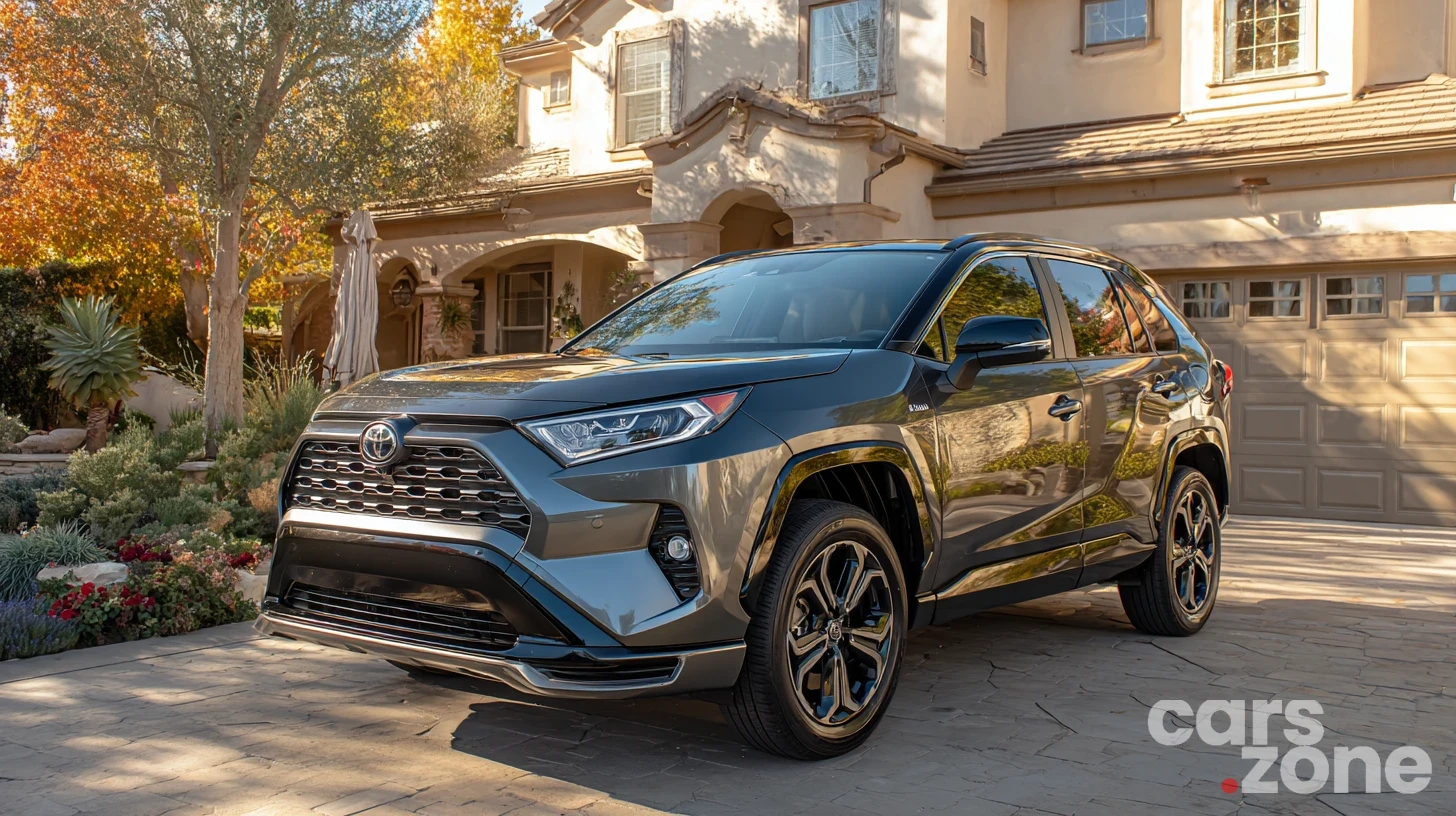
The Toyota RAV4 is the best-selling SUV in the United States — and in 2025 it comes in two flavors that cost nearly identical amounts to own over five years despite starting from very different purchase prices. That gap, or rather the near-absence of it, is the fact most hybrid SUV shoppers don't know going in.
According to Edmunds True Cost to Own data fetched in March 2026, the 2025 RAV4 Gas LE FWD costs $34,022 over five years. The RAV4 Hybrid LE AWD costs $34,628. The $606 difference — roughly $10 per month — is the entire five-year premium you pay to get standard all-wheel drive, 30% better fuel economy, and a vehicle that most analysts expect to hold its value more strongly as gas prices and hybrid demand evolve through the late 2020s.
That number surprises most buyers. The hybrid sticker price is $3,824 higher. The assumption is that the five-year cost gap should be similar. What closes it: $1,820 in fuel savings over five years, lower repair costs in years three through five, and a depreciation trajectory that for the RAV4 Hybrid runs almost identically to the gas version despite the higher starting price. The math works in ways the sticker price doesn't advertise.
The Full 5-Year Cost — Every Line Item Side by Side
Same mileage, same credit, same methodology — different powertrain
These are Edmunds TCO figures fetched directly from the source in March 2026. Both vehicles use the base LE trim for direct comparison. The gas RAV4 is FWD standard; the hybrid comes AWD standard — that is a meaningful capability difference accounted for in the price gap. For context on where both sit against all nine vehicle categories, the vehicle type cost comparisons hub shows how the RAV4 hybrid's $9,591 AAA annual average compares to everything from small sedans to full-size pickups.
Source: Edmunds True Cost to Own® 2025. Fetched March 2026. Both trims: LE base, 15,000 mi/yr, 10% down, 60-month loan, above-avg credit. National average figures.
Green = winner in that category. Red = higher cost. The gas RAV4 wins on purchase price, insurance, maintenance, and financing — all tied to the lower sticker price. The hybrid wins on fuel, repairs, and depreciation. The fact that depreciation is nearly identical ($9,614 vs $9,630) is the key finding: the hybrid doesn't depreciate faster despite costing more, which means the higher purchase price isn't being punished by the used market.
Where the Hybrid Saves and Where It Costs More
Breaking down the $606 gap category by category
The $606 five-year gap deserves to be walked through explicitly, because the direction of individual categories surprises most buyers who assume the hybrid simply costs more everywhere.
| Cost Category | RAV4 Gas LE | RAV4 Hybrid LE | Difference | Winner |
|---|---|---|---|---|
| Purchase Price | $31,845 | $35,669 | Hybrid +$3,824 | Gas |
| Depreciation (5yr) | $9,630 | $9,614 | Hybrid saves $16 | Hybrid (tie) |
| Insurance (5yr) | $3,776 | $4,193 | Hybrid +$417 | Gas |
| Fuel (5yr) | $7,911 | $6,091 | Hybrid saves $1,820 | Hybrid |
| Maintenance (5yr) | $4,894 | $5,156 | Hybrid +$262 | Gas |
| Repairs (5yr) | $744 | $724 | Hybrid saves $20 | Hybrid (tie) |
| Financing (5yr) | $5,585 | $6,256 | Hybrid +$671 | Gas |
| Taxes & Fees (5yr) | $1,482 | $2,594 | Hybrid +$1,112 | Gas |
| 5-Year TCO Total | $34,022 | $34,628 | Hybrid +$606 | Gas (barely) |
Source: Edmunds True Cost to Own® 2025, fetched March 2026. Purchase price not included in TCO total — shown for context.
The taxes and fees line is the most overlooked cost in this comparison. The hybrid pays $1,112 more over five years in taxes and registration — entirely because the vehicle costs more and tax is calculated as a percentage of purchase price. That single line accounts for nearly twice the entire remaining five-year cost gap. Without it, the hybrid's TCO would be lower than the gas version's.
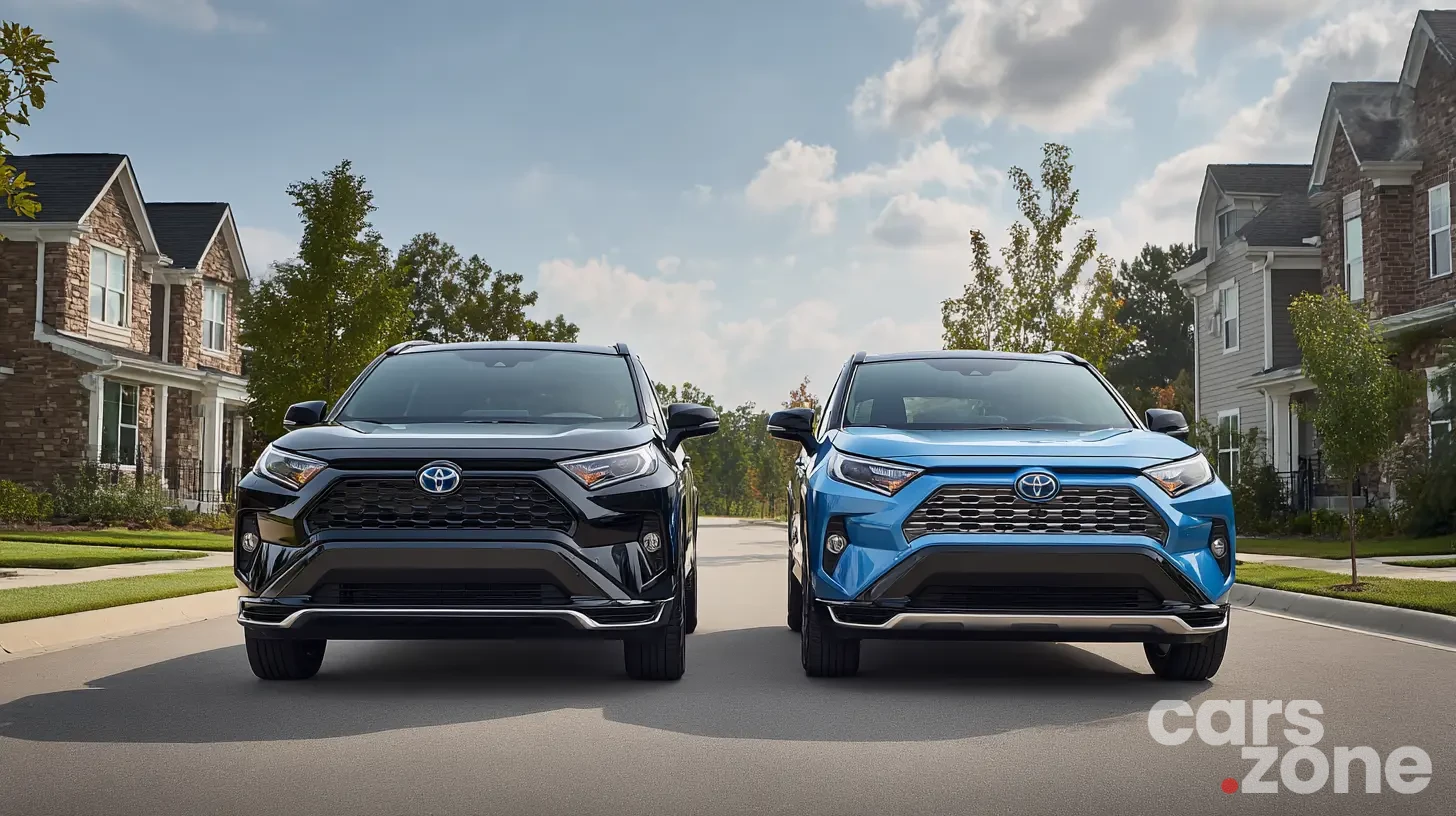
2025 RAV4 Gas LE vs RAV4 Hybrid LE — nearly identical 5-year costs despite a $3,824 purchase price difference. Image: Cars.Zone
Break-Even Analysis: At What Mileage Does the Hybrid Win?
Fuel savings are the hybrid's main lever — mileage determines how fast they compound
The break-even question is the one most buyers ask and most articles answer incorrectly — by calculating only fuel savings against the purchase price premium. That method ignores financing cost, insurance, maintenance, and taxes. The correct break-even uses the full TCO gap. For how this hybrid premium compares across sedan and crossover categories beyond SUVs, the hybrid vs gas car cost comparison covers AAA 2025 category averages for the full vehicle spectrum.
Using the Edmunds TCO data, the RAV4 Hybrid costs $606 more over 5 years at 15,000 miles annually. That is the complete picture at that mileage. At lower mileage, the fuel savings shrink and the gap widens. At higher mileage, fuel savings grow and the gap closes or reverses.
| Annual Mileage | Est. 5-yr Fuel Cost — Gas | Est. 5-yr Fuel Cost — Hybrid | Fuel Savings | Adjusted TCO Gap | Hybrid Position |
|---|---|---|---|---|---|
| 8,000 mi/yr | ~$4,219 | ~$3,249 | ~$970 | Hybrid +$1,456 | Gas wins |
| 10,000 mi/yr | ~$5,274 | ~$4,061 | ~$1,213 | Hybrid +$1,213 | Gas wins |
| 13,500 mi/yr (national avg) | ~$7,120 | ~$5,482 | ~$1,638 | Hybrid +$788 | Gas wins (slightly) |
| 15,000 mi/yr (Edmunds base) | $7,911 | $6,091 | $1,820 | Hybrid +$606 | Gas wins (barely) |
| 18,000 mi/yr | ~$9,493 | ~$7,309 | ~$2,184 | Hybrid +$242 | Near break-even |
| 20,000 mi/yr | ~$10,548 | ~$8,121 | ~$2,427 | Hybrid saves ~$1 | Break-even |
Fuel cost estimates scaled proportionally from Edmunds 15,000 mi/yr base using $3.151/gal national avg (AAA YDC 2025). Non-fuel TCO costs held constant. Approximate figures.
Edmunds uses 15,000 miles per year as their baseline. The FHWA reports the US national average is 13,500 miles. At 13,500 miles annually, the RAV4 Hybrid's fuel savings shrink from $1,820 to approximately $1,638 — widening the five-year TCO gap from $606 to roughly $788. Still close. But buyers driving under 12,000 miles per year should run their specific numbers before assuming the hybrid pays off within five years. It often doesn't at low mileage.
Which RAV4 Is Right for Your Situation — Use This to Find Out
Three questions determine whether the hybrid or gas version makes more financial sense for you
RAV4 Hybrid vs Gas: Personalized Recommendation
3 questions · Based on Edmunds 2025 TCO data · Takes 60 seconds
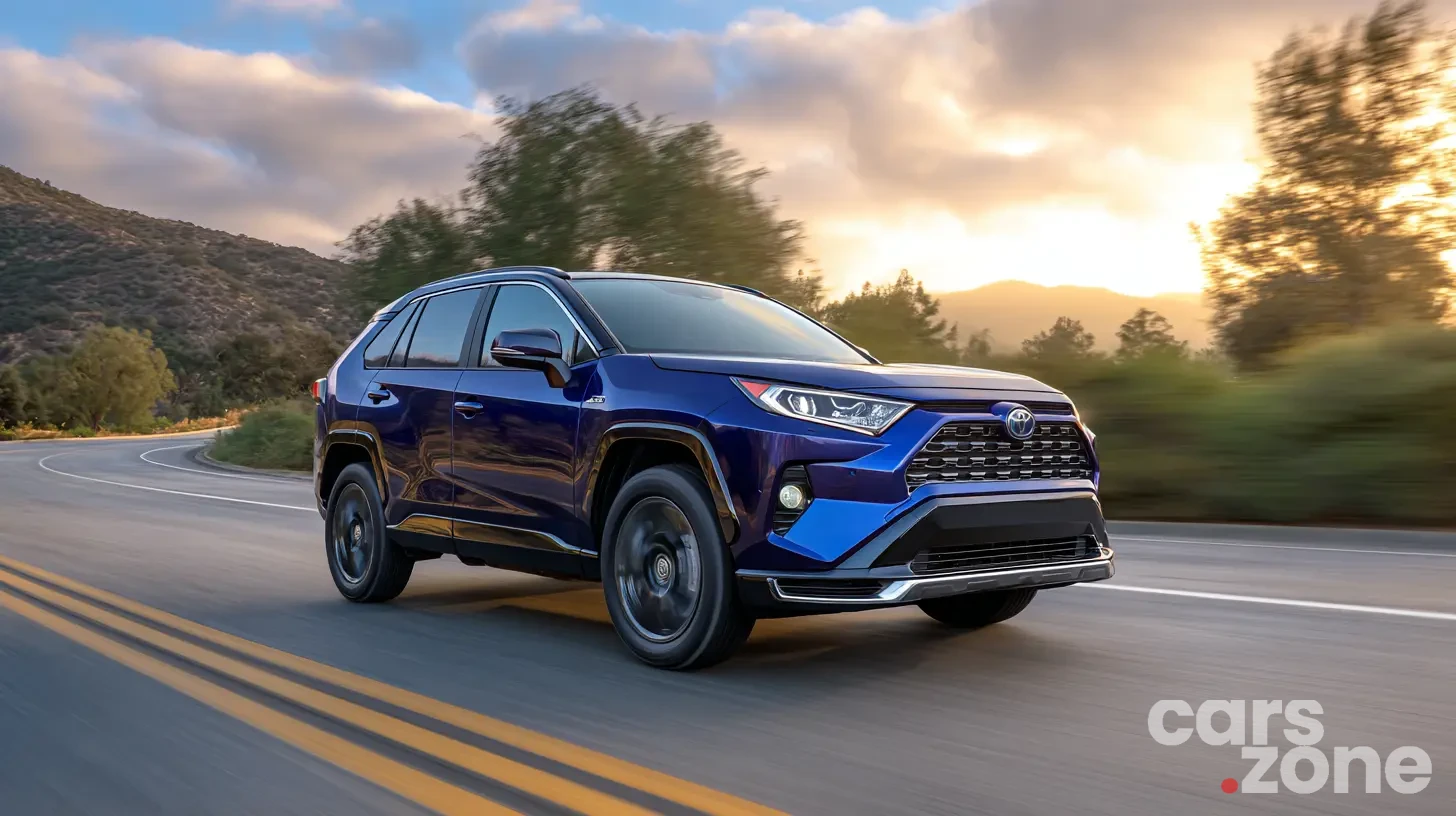
At highway speeds, the RAV4 Hybrid's regenerative braking advantage narrows compared to city driving — combined EPA rating of 39 MPG accounts for both. Image: Cars.Zone
The AWD Factor — Why This Comparison Isn't Perfectly Apples-to-Apples
The hybrid comes standard with AWD. The gas LE comes standard with FWD. That matters.
One nuance in this comparison that most articles skip: you are not comparing identical vehicles. The RAV4 Gas LE comes front-wheel drive as standard. The RAV4 Hybrid LE comes all-wheel drive as standard — because the hybrid system powers the rear axle with a separate electric motor, so AWD is essentially free to add from Toyota's engineering perspective.
If you add AWD to the gas RAV4 by upgrading to the LE AWD trim, the price rises to approximately $32,768 per Edmunds — narrowing the purchase price gap from $3,824 to $2,901. The five-year TCO for the gas LE AWD comes to $34,772 — now only $144 less than the hybrid over five years.
| Model | Drivetrain | Purchase Price | 5-yr Fuel | 5-yr TCO | vs Hybrid LE |
|---|---|---|---|---|---|
| RAV4 Gas LE FWD | FWD | $31,845 | $7,911 | $34,022 | $606 cheaper |
| RAV4 Gas LE AWD | AWD | $32,768 | $7,911 | $34,772 | $144 cheaper |
| RAV4 Hybrid LE AWD | AWD (standard) | $35,669 | $6,091 | $34,628 | — |
Source: Edmunds True Cost to Own® 2025, fetched March 2026. All figures at 15,000 mi/yr.
The honest comparison for buyers who need AWD: the RAV4 Hybrid costs only $144 more over five years than the gas AWD version — while returning 30% better fuel economy, generating less exhaust emissions, and carrying a stronger resale trajectory in a market where hybrid demand is increasing. For AWD buyers, the hybrid case is very strong on the numbers alone. Buyers still deciding between an SUV and a sedan before committing to a body style should first read the SUV vs sedan total ownership cost comparison — the body style decision changes the baseline numbers entirely.
If you need AWD and drive over 13,500 miles annually, the RAV4 Hybrid costs approximately $144 less over five years than the equivalent gas AWD version — while providing better fuel economy, lower emissions, and a hybrid drivetrain with a track record of reliability that Consumer Reports rates well above average. The hybrid premium, at this configuration and mileage, has essentially already paid for itself before you calculate the fuel savings.
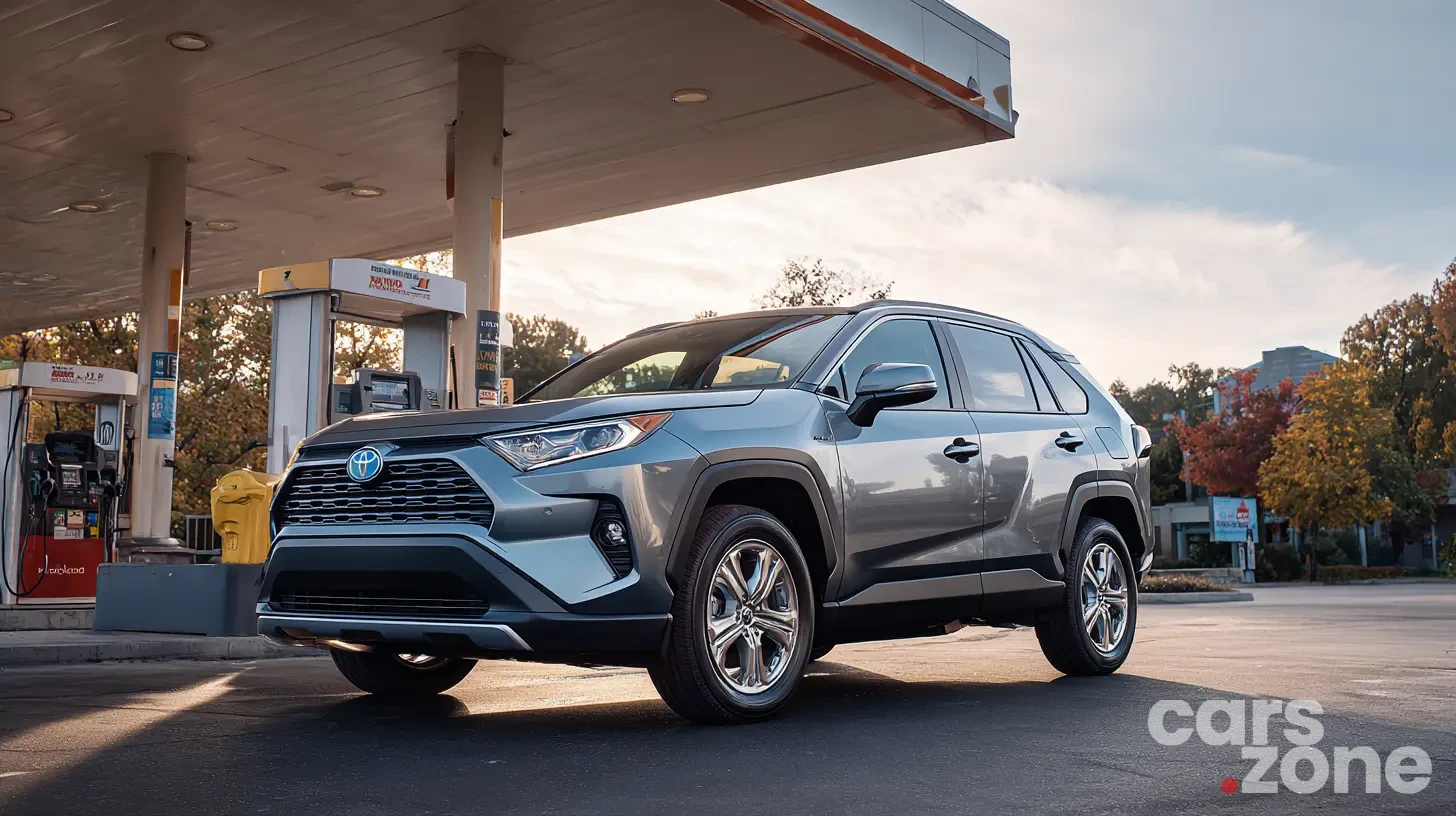
RAV4 Hybrid owners fill up approximately 23% less often than gas RAV4 owners at equivalent mileage — at 39 MPG combined vs 30 MPG combined. Image: Cars.Zone
What the Data Says About Long-Term Reliability
Hybrid drivetrains were once the wild card — 2025 data removes most of that uncertainty
The concern most buyers raised about hybrid SUVs five years ago was battery and drivetrain reliability. The 2025 data has largely resolved that question for the RAV4 Hybrid specifically.
Consumer Reports' 2025 reliability data rates the RAV4 Hybrid above average for predicted reliability — a significant improvement from earlier hybrid generations where battery degradation and inverter costs added unpredictability. Toyota's hybrid system, now in its fourth generation across the RAV4 nameplate, has one of the longest reliability track records in the segment. RepairPal rates the Toyota RAV4 Hybrid's annual repair cost at $421 — lower than the gas RAV4's $429 estimate and significantly below the compact SUV category average.
Buyers also evaluating a fully electric SUV alongside the hybrid option can see the full five-year cost gap in the electric vs gas car ownership cost breakdown using the same Edmunds methodology.
One number worth knowing: Toyota offers an 8-year, 100,000-mile warranty on the hybrid battery. That coverage runs well beyond the Edmunds five-year TCO window. Buyers planning to keep the vehicle past year five carry essentially no battery replacement risk under warranty, and Toyota's historical replacement data shows RAV4 Hybrid battery failures are rare in the first 150,000 miles.
The RAV4 Hybrid earns an above-average predicted reliability score in Consumer Reports' 2025 data — the same publication that rates the broader compact SUV category as average and full-size pickups as below average. For buyers concerned that hybrid complexity translates to reliability risk in the RAV4 specifically, the 10-year production history and the 2025 repair cost data both argue against that concern.
Frequently Asked Questions
Specific answers to the RAV4 hybrid vs gas questions buyers actually search
Weighing electric too? See our Electric SUV vs Gas SUV total cost of ownership comparison — the same SUV question with the EV option added.

About the Author — Ashvin J. Sonani
Founder & Lead Researcher at Cars.Zone. Digital marketer, data analyst, and domain investor with 28+ years of internet experience — from the pre-Google era of Lycos and Altavista through ecommerce operations (2000–2018) to current focus on US automotive cost intelligence. Specializes in extracting actionable conclusions from complex, multi-variable datasets across insurance, depreciation, and total cost of ownership. Cars.Zone analyses are built from primary industry sources (AAA, Kelley Blue Book, Edmunds, iSeeCars, Experian) for core cost data, with select supporting figures such as insurance-by-age sourced from industry aggregators including Bankrate — each figure’s source disclosed and cross-checked before publication. No manufacturer or dealer relationships influence editorial content.